Without a close second, the subject I receive the most etiquette
inquires on is teaching manners to children. Over these two years, I have
mentioned several
books which I think help adults to brush up their
Shakespeare, so to speak, in order to help children in turn to be mannered. But as I am raising my own girls, I notice nothing teaches better than example.
Before I had children, I did not appreciate wild children in dining rooms, it turns out it is not more
precious when my own daughter acts out. I am even less likely to tolerate wild behaviour from my own offspring. I am lucky that these incidents are very rare, but if they do happen, Josh or I walk our oldest out of the room and say to her quietly, "We need to sit down here until you can gather yourself, then we can go back." She does not want to miss a second at the table and composes herself with some gentle reassuring.
We do exactly what many do not do: We take them to lovely places; well-mannered dining rooms, and we eat three course meals with them. Yes. I am a dining dare-devil at every level.

Corporate management habits have helped me here: I believe that if you do not give the tools to succeed then you have
assured failure. To that end, I set my babies up to win: We go very early to dinner or at lunchtime, I call ahead and warn the captain that I am bringing young children who are learning their manners and that I would love to sit in a quiet corner.
I bring distractions and things to make the event special: Small books, little coloring tablets and so on.

And I do not leave without my daughter's tiny precious porcelain tea cup and saucer. Then, every event is a "tea party" for her and it makes everything very much more wonderful for she and us.

She can absolutely dress up her favorite doll and bring her to the table to have her own chair. Why not? At my favorite restaurant there is a woman who eats on the terrace every Saturday evening with her dog
in the chair next to her,
and he has his own plate. Why not bring a doll or toy as long as they do not make noise (bark or drool)?
My babies are young: Two and a half and six months. Still, the older has dined
successfully in some wonderful restaurants which I would not say are particularly kid-friendly. My younger Daughter comes along too, she is a very easy baby and loves everything, so no problem there. I cannot speak for a difficult baby as I have not had one.
I do not believe in spending a ton of money to eat out (I am old-world
cheap, not frugal, to be clear) but I like to be out, experience things and gain culture, and my girls need to be well-mannered citizens of the world. To that end we do something of this nature every week without fail.
There is a little tea room nearby which we love and which welcomes children happily. They make everything perfect for them: A pot of tea and a scone costs about $4.00 and has been great manners practice.
We step it up to lunch or dinner whenever life allows. Sometimes Josh can be there, which is critical for them because they need to be aware of gentleman's manners also, but he works a great deal and consequently, much of this task has been mine (which is not a hardship).
I have learned little tricks to make the experience more exciting for my Daughter. In better restaurants, I ask them to fill a teapot with water and bring it to the table and my Daughter has her own tea party for lunch or dinner while we dine together. She
loves a tea party, anywhere, anytime.
She needs to practice with everything on the table and we help her deal carefully with glasses and all the items there (see below). Only knives are prohibited. We reinforce the message that objects on a dining table are
tools and not toys; in order to learn to use them she is allowed to deal with everything herself under our watchful eyes.

I remove only the knife from her place setting and she otherwise can use both a spoon and fork because her place is set with them at all meals at home as well.

When we are out, things need to be special to keep her attention, she is allowed to have treats and fun food and all the rules of organics are suspended.

It is great that they make hamburgers for children in good dining rooms now! When my parents went through this process with my Brother and I, we were constantly
disappointed by the choices for us; all very serious food, nothing we would love to eat. Consequently, the experience was not as much fun as it could have been. But there was always dessert.
This time is about joy, not restrictions or label reading (you cannot do that in someone's home or a restaurant - at the moment - anyway, right?).

Disasters? We have had
plenty of spills, stains, and tears but all of those
things have reduced since the beginning. And the
restaurants have been duly warned in order to project against
permanent issues.
Delicious, kid friendly food, a little lightheartedness, and some space between us and the next table of diners have helped to make etiquette practice painless for all of us. Happy Mama...

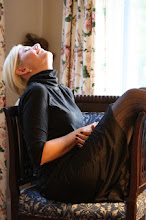
(Ooops, did I forget to tell you I had cut all my hair off? What do you think? I kind of miss my long luxurious locks!)
and Happy babies. because I have also learned to try to be sure there is room for
spontaneous tap dancing: Because sometimes you gotta dance!


Will you share some advice on teaching manners to children for this Workshop?